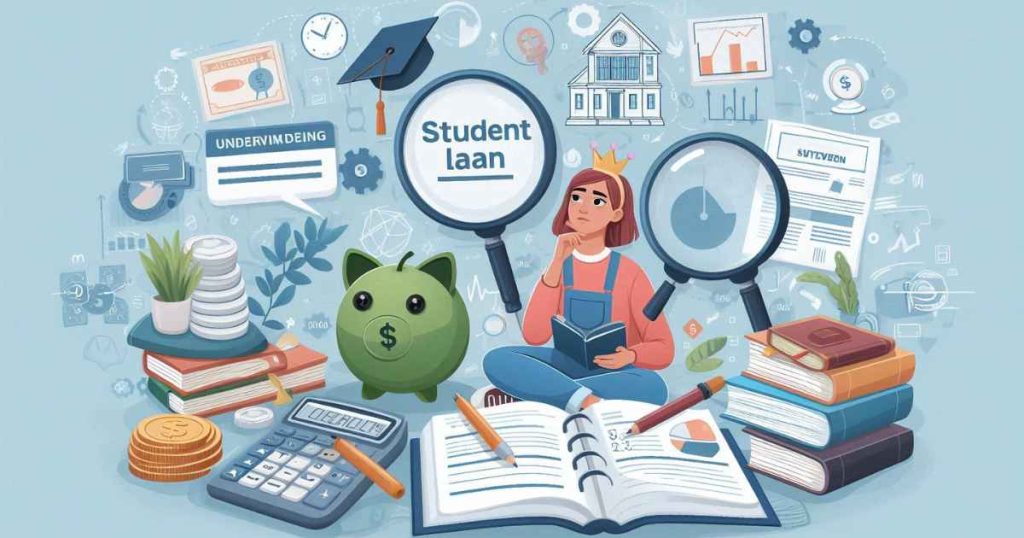
People need education to realize both personal and professional success although obtaining it through today’s educational standards requires substantial financial investment. For many students and families, education loans are the key to unlocking the doors to higher education. Learning dreams become achievable through education loans which provides needed financial backing to enable students to construct their future success. Many individuals find dealing with student loan systems to be highly complex. That’s why we’ve created this comprehensive guide—to make education loans easier to understand and help you take control of your financial future.
In this guide, you’ll learn what education loans are, the different types available (federal and private), and the steps to apply. We will study crucial subjects starting with interest rate details and moving to payment methods together with programs offering loan release. Throughout this guide you will gain all the necessary tools alongside educational understanding needed to fund your education properly.
What Are Education Loans?
An education loan is a financial tool designed to help students cover the costs of higher education. These loans can be used for various expenses, including tuition fees, living costs, books, and other educational necessities.
What makes education loans unique is their purpose. Unlike other types of loans, education loans are specifically tailored for students and often come with lower interest rates, repayment flexibility, and borrower-friendly features. These features make them an essential lifeline for students who might not otherwise afford college or university.
There are two broad categories of education loans—federal and private. Federal loans are issued by the government, while private loans are offered by banks, credit unions, and online lenders. Each has its own benefits, which we’ll explore in detail below.
How Education Loans Work?
Education loans are designed to ease the financial burden of pursuing higher education. The process of loan application does not require immediate repayment of the borrowed amount. The loan repayment period starts six months to one year after your course completion date which lets you find employment and normalise your financial situation. The loan repayment duration can reach 6-7 years based on the conditions set by lenders during the agreement process.
Your educational institution receives funds directly from loans during each semester start date to pay your tuition costs without interruption. Additionally, education loans cover other essential expenses like hostel fees, library charges, books, and laboratory costs. The extensive policy of coverage enables students to concentrate on education without needing to pay any extra costs from their pockets.
Cheque multiple lenders to uncover the best terms and conditions because interest rates differ among lenders when seeking a loan. With flexible repayment plans and broad coverage, education loans make achieving your academic dreams more accessible than ever.
Types of Education Loans
Education loans are financial tools designed to help students and families cover the costs of higher education. They come in various types, including student loans, study abroad loans, Parent PLUS loans, private loans, and federal loans. Each type serves different needs, offering options for tuition, living expenses, and international studies. Understanding these can help you make an informed choice.
Federal Loans
Federal loans are generally the first choice for students because they come with lower interest rates, flexible repayment options, and borrower protections. Here are the most common types:
-
Direct Subsidized Loans
Designed for undergraduate students with financial need, these loans don’t accrue interest while you’re in school. -
Direct Unsubsidized Loans
Available for both undergraduate and graduate students, these loans don’t require proof of financial need, but interest starts accruing from the moment the loan is disbursed. -
PLUS Loans
These loans are for graduate students or parents of undergraduates. They cover remaining educational costs but require a credit check. -
Perkins Loans
Although discontinued in 2017, some institutions may still handle existing Perkins Loans for eligible borrowers.
Private Loans
Private loans are an alternative if you’ve maxed out federal loan options or need additional funding. Offered by banks, credit unions, and online lenders, private loans have distinct features:
-
Pros:
- Can cover costs beyond federal loan limits.
- May offer competitive interest rates for borrowers with excellent credit.
-
Cons:
- Higher interest rates compared to federal loans, especially for those without a co-signer.
- Limited repayment flexibility.
Undergraduate vs. Graduate Loans
Undergraduate loans typically have lower interest rates and easier qualification requirements. Graduate loans, on the other hand, allow for higher borrowing limits but often come with higher interest rates. Understanding your level of education is key to selecting a loan that fits your needs.
Eligibility Criteria
To qualify for education loans, there are a few basic requirements you’ll need to meet.
Federal Loans
- Enrollment Status: You must be enrolled at least half-time in an eligible educational institution.
- Citizenship: Federal loans require U.S. citizenship or eligible non-citizen status.
- FAFSA Application: Completing the FAFSA form is mandatory for federal loans.
Private Loans
Private loans come with additional conditions, especially regarding creditworthiness. If you don’t have a strong credit history, you’ll likely need a co-signer. A co-signer takes joint responsibility for loan repayment, so be sure you and your co-signer understand the implications before proceeding.
Lastly, ensure your institution is accredited. Lenders won’t approve loans for unaccredited schools, so double-check the status of your chosen college or university.
Always check that your college or university is accredited, as this impacts your eligibility for many loans.
The Education Loan Application Process
The loan application process varies for federal and private loans. Here’s a simple step-by-step breakdown.
For Federal Loans
- Complete FAFSA: Start with the Free Application for Federal Student Aid (FAFSA). This form determines your federal loan eligibility.
- Review Your Aid Offer: After submitting the FAFSA, you’ll receive a financial aid package detailing your loan options.
- Accept the Loan: Decide which federal loans to accept (and how much to borrow).
- Sign a Master Promissory Note (MPN): This document legally confirms your agreement to repay the loan.
For Private Loans
- Choose a Lender: Compare lenders based on interest rates, repayment terms, and fees.
- Apply Online: Submit an application through the lender’s website.
- Submit Documents: Provide proof of identity, income, and financial history.
- Get Approved: If approved, your loan funds will be disbursed directly to your school.
Key Timelines
For federal loans, plan to file the FAFSA as early as possible, ideally starting in October. For private loans, you can apply at any time, but allow several weeks for approval.
Interest Rates and Fees
Understanding interest rates and fees is crucial. Here’s a quick breakdown:
- Fixed Interest Rates stay the same throughout the loan term, providing predictability.
- Variable Interest Rates fluctuate, often starting lower but with the risk of increases over time.
Federal loans typically charge lower, fixed rates, while private loans may offer both fixed and variable options. Factor in origination fees, which are a percentage of the loan amount, and check for hidden charges before committing.
Repayment Options
Repaying your education loan doesn’t have to be stressful. Federal loans offer various plans, including:
- Standard Repayment (fixed payments over 10 years).
- Graduated Repayment (lower payments that increase over time).
- Extended Repayment (longer timelines and lower monthly payments).
- Income-Driven Repayment (payments based on your income, perfect for those earning less).
Private loans may offer fewer options, but you can often work with lenders to find a plan that suits your situation. Remember that deferment and forbearance options exist if you face financial hardships.
Loan Forgiveness Programs
Certain careers and situations may make you eligible for partial or full loan forgiveness. Popular programs include:
- Public Service Loan Forgiveness (PSLF)
Available to government and nonprofit employees after 120 qualifying payments. - Teacher Loan Forgiveness
For educators in low-income schools. - Income-Driven Repayment Forgiveness
Remaining balances after 20-25 years on an income-driven plan may be forgiven.
Each program has strict requirements, so consider consulting with a financial advisor to see if you qualify.
Refinancing Education Loans
Refinancing involves replacing your current loans with a new one at a lower interest rate. This is a great option if you have a stable income and good credit. However, be cautious—refinancing federal loans into private ones means losing federal benefits like income-driven repayment and forgiveness options.
What Are the Benefits of Taking an Education Loan?
Education loans offer a lifeline to students aspiring to achieve their academic dreams without financial constraints. Here’s why they’re a smart choice:
- No Immediate Financial Burden: Repayment begins after course completion, giving you time to focus on studies and career building.
- Covers All Expenses: From tuition fees to books, hostel charges, and even travel costs, education loans ensure you don’t miss out on any opportunity.
- Builds Credit History: Timely repayments help establish a strong credit score, benefiting future financial endeavors.
- Flexible Repayment Options: Choose from various plans tailored to your income and financial situation.
- Tax Benefits: Enjoy deductions on interest paid under Section 80E of the Income Tax Act.
With these advantages, education loans empower you to invest in your future confidently.
Types of Debt for Student Loans
Student loans fall into two main categories: federal and private. Federal loans are backed by the government and typically offer lower interest rates, flexible repayment options, and benefits like income-driven plans or loan forgiveness programs.
These include Direct Subsidized Loans, Direct Unsubsidized Loans, and PLUS Loans for parents or graduate students. Private student loans, on the other hand, are offered by banks, credit unions, or online lenders. They often have higher interest rates and fewer borrower protections but can be useful for covering gaps after federal aid. Understanding these types helps you choose the right loan for your education needs while managing debt responsibly.
They come in various types, each with unique features:
- Direct Subsidized Loans: Available to eligible undergraduate students who demonstrate financial need. The government pays the interest while you’re in school and during deferment periods.
- Direct Unsubsidized Loans: Open to undergraduate, graduate, and professional students. Financial need is not required, but interest accrues during all periods.
- Direct PLUS Loans: Designed for graduate or professional students and parents of dependent undergraduates. These loans cover expenses not met by other financial aid and require a credit check. Borrowers with poor credit may need to meet additional criteria.
- Direct Consolidation Loans: Allow you to combine multiple eligible federal student loans into one, simplifying repayment with a single loan servicer.
Conclusion
Education loans are a powerful tool to help you achieve your academic and career goals without letting financial barriers stand in your way. Knowledge of different loan types combined with familiarity of the application process and payment methods enables you to select choices which will build your future success. The guidance in this guide has prepared you to handle the loan application process at both federal and private levels as well as loan forgiveness opportunities with professional assurance. The decision to invest in educational learning channels funds toward building your upcoming opportunities. Start making the first move right now to gain access to the path that leads towards a better and more satisfying future ahead.